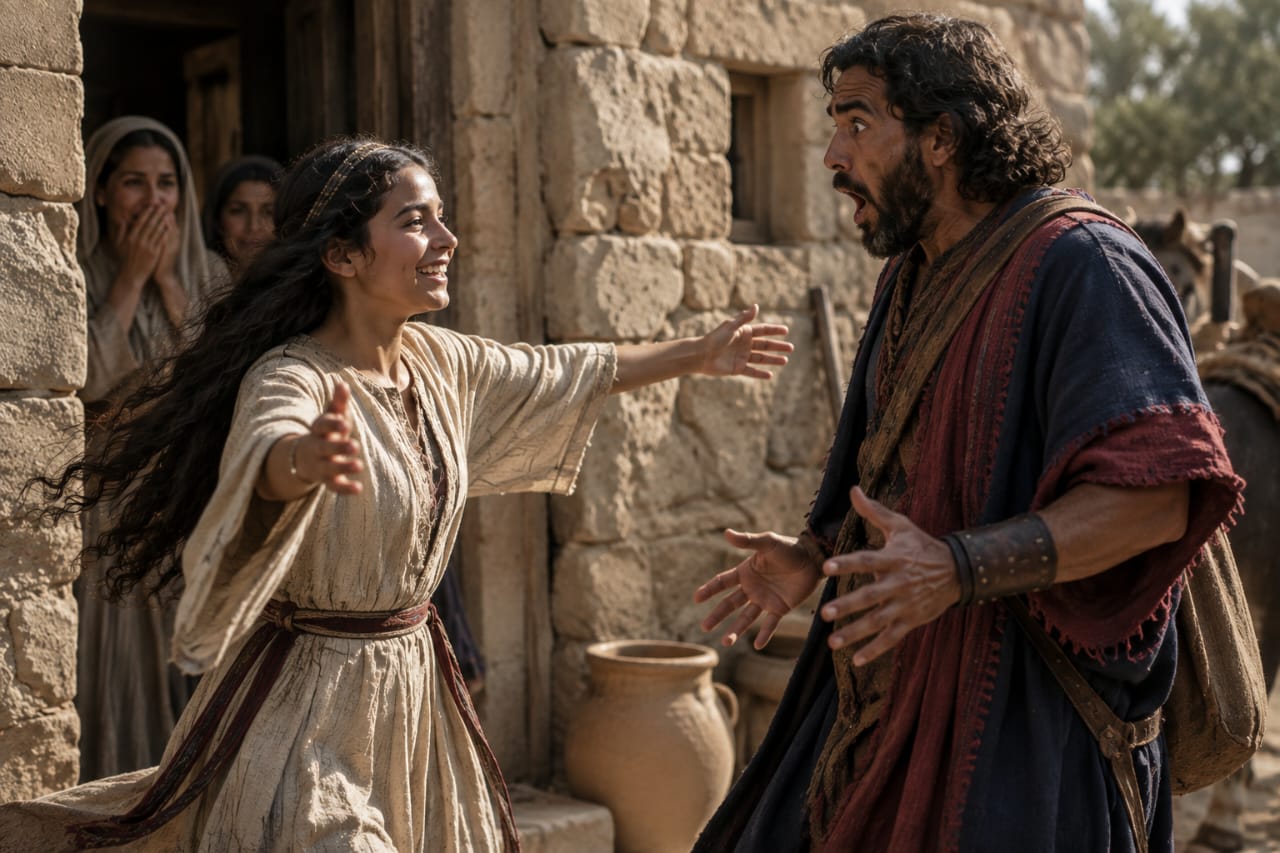
There is something deeply human, almost haunting, about the story of Jephthah in Judges chapters 10 and 11. It is not merely a story of war and victory; it is a story of wounds- old, buried, unspoken wounds and the devastating cost of leaving them unattended.
Jephthah’s life began with rejection. He was the son of a harlot, a label that would follow him long before he could define himself. When his father died, his half-brothers drove him away, stripping him not only of inheritance but of belonging. The text tells us he gathered “worthless men” around him—a telling detail. Often, we gravitate toward environments that mirror our internal world. Rejection seeks familiarity. Pain finds company.
What happens to a child who grows up unwanted?
What beliefs take root in the soil of exclusion?
“I am not enough.”
“I am not wanted.”
“I must earn love.”
“I must prove my worth.”
These are not just thoughts. They are core beliefs, deep, often unconscious frameworks through which life is interpreted. And these beliefs do not remain dormant. They shape decisions, relationships, and even our spirituality.
When the Israelites cried out for deliverance from the Ammonites, Jephthah was called upon. The rejected one became the deliverer. Yet, while his circumstances had changed, it appears his inner world had not.
In Judges 11:30–31, Jephthah makes a vow:
“And Jephthah made a vow unto the Lord, and said, If thou shalt without fail deliver the children of Ammon into mine hands, then it shall be, that whatsoever cometh forth of the doors of my house to meet me, when I return in peace from the children of Ammon, shall surely be the Lord’s, and I will offer it up for a burnt offering.”
It is a troubling vow. Not because of its sincerity, but because of its origin.
God had never asked for such a bargain.
Throughout Israel’s history, God’s deliverance was not transactional. There was no “trade by barter.” No precedent for such an exchange. So why did Jephthah make this vow?
Because wounded people often overcompensate.
When you carry the belief that you are not enough, you try to earn what is already freely given. You bargain where grace is available. You sacrifice excessively where love requires none. You assume help must be paid for, that favor must be deserved, that acceptance must be negotiated.
This is the language of trauma.
It distorts not only how we see ourselves, but how we see God and others. It convinces us that nothing is free—not even love. And so, we make inner vows. We strive excessively. We give beyond measure. We refuse help. We shut doors against the very people sent to support us.
We call it strength. But often, it is self-sabotage.
Jephthah went to battle, and God granted victory, without needing his vow. But when he returned home, the unthinkable happened. His only daughter came out to meet him, dancing in celebration.
And in that moment, the cost of an unhealed past became visible.
The text tells us she was his only child, no son, no other daughter. She represented his legacy, his future, his continuity. Yet, because of a vow born out of woundedness, she became the sacrifice.
This is the tragedy of unexamined pain. It rarely ends with us.
When we do not confront our wounds, they find expression in our choices. And those choices often affect the innocent—our children, our relationships, our communities. This is how trauma becomes transgenerational. Not merely through events, but through patterns.
Jephthah did not intend harm. He did not ask for his story. He did not choose the circumstances of his birth. But adulthood handed him something powerful and sobering: responsibility.
And responsibility demands awareness.
Healing is not about blaming the past. It is about refusing to let the past dictate the future.
The Scriptures later record that it became a custom in Israel for young women to mourn Jephthah’s daughter every year for four days. What began as one man’s unresolved pain became a communal ritual of grief.
A pattern. A memory. A legacy of sorrow.
This is how trauma spreads—quietly, subtly, culturally. It becomes “the way things are done.” Until someone chooses differently. Until someone pauses. Reflects. Seeks healing.
There is a powerful truth here: trauma is not only what happened to us. It is also what should have happened—but did not. The love not given. The affirmation not spoken. The safety not provided.
But there is also another truth: what was missing can be restored.
Not by ignoring the pain. Not by overcompensating.
But by bringing the unconscious into awareness. By healing. By choosing wholeness.
Because if we do not heal, we may bleed on those who did not cut us.
Jephthah’s story is a warning, but it is also an invitation. An invitation to examine the beliefs we carry. To release the need to earn what God has already given freely. To stop sacrificing unnecessarily at the altar of unworthiness. And most importantly, to break cycles.
You are not responsible for what happened to you as a child.
But you are responsible for what you do with it now.
Healing is possible.
Wholeness is available.
And your story does not have to end in inherited pain.
If this reflection resonates with you, if you recognize patterns of overcompensation, self-sabotage, difficulty receiving love, or lingering wounds from your past—you do not have to walk this journey alone.
Healing begins with awareness, but it deepens with guided support.
I invite you to take the next step toward your healing and wholeness. Book a therapy or coaching session today:
Your healing is not just about you. It is about the generations connected to you.
Choose to heal. Choose to break the cycle. Choose to live whole.

No comments yet. Be the first to share your thoughts!