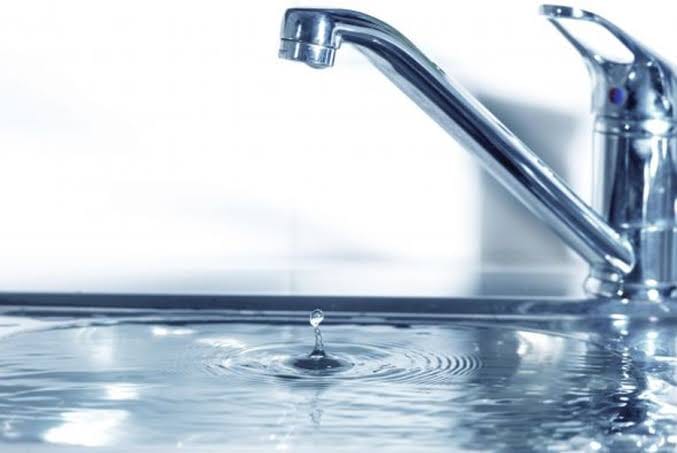
I had a leaky tap in my bathroom. The plumber wasn’t going to be around for a couple of days, so I kept trying to manage it by tightening and adjusting, hoping it would stop. It didn’t.
One night, I placed a bucket underneath the tap and went to bed.
To my utmost surprise, I woke up the next morning to a bucket that was completely full and running over.
And I found myself wondering:
How can a few drops, minute by minute, amount to a full bucket… and still overflow?
That moment stayed with me. And I realized this: little, when it is well stewarded and preserved, can amount to a whole lot.
The Little Things We Overlook
A little time. A little change. A simple schedule. A budget. Intentional moments with family, friends, spouses, children. They look small. Almost insignificant. But they are not. Many times, what we call “inadequacy” is actually wrapped in something deeper unmindful wastefulness.
I am reminded of the story in John 6:1–14, where Jesus fed five thousand men, excluding women and children, with five loaves and two fishes.
Yes, it was a miracle of provision but also a lesson in preservation.
After everyone had eaten and was satisfied, Jesus said:
“Gather the fragments that remain, so that nothing is lost.” (John 6:12)
Jesus, who had just multiplied abundance, still insisted that nothing be wasted. It tells us something profound: God is not only interested in giving He is interested in how we steward what is given.
And then came the outcome. They gathered the fragments. And there were twelve baskets full.
Think about it.
These were people who, just moments before, had nothing to eat.
Yet somehow, in the midst of abundance, there was enough carelessness, enough disregard, enough “it doesn’t matter,” that crumbs were left scattered crumbs that eventually filled twelve baskets.
Twelve.
Which raises an uncomfortable but necessary question:
How do people move from lack to abundance and still behave as though what they have is disposable?
And even deeper:
What if those crumbs those very things considered too small to keep were actually enough to begin a new life?
The Crumbs We Waste
What are the crumbs in our own lives?
- The 10–15 minutes we scroll away without thought
- The small impulsive spendings we dismiss as “insignificant”
- The ideas we never act on because they seem too small
- The relationships we neglect in small, daily ways
- The discipline we postpone because “it won’t make a difference”
We treat them like crumbs.We step over them. We ignore them. But what if those crumbs, gathered over time, become twelve baskets?
The Hard Truth About “Not Enough”
Oftentimes, those who complain of inadequacy are the most wasteful.
- “I don’t have enough time,” yet hours disappear into distractions.
- “I don’t have enough money,” yet spending leaks through unmanaged habits.
- “I can’t save,” yet nothing is tracked, nothing is structured.
If we are honest, it is not always because there is nothing. Sometimes, it is because we are not gathering what is already there.
Is Scarcity Always Real?
What if scarcity, in many cases, is not just a condition but a pattern?
Here is a thought:
What if scarcity, in some cases, is a scam?
Not because life doesn’t get hard. Not because resources don’t sometimes fall short. But because, if we look closely, we may discover that we are wasting what is already enough.
Could our habits be quietly working against us?
Could our lack of structure be creating the very pressure we complain about?
Could our wastefulness be part of why things remain the way they are?
The 10% Question
Someone says, “I don’t have enough to set aside 10%.” But if life suddenly demanded that you survive on less much less you would adjust. You would find a way. Which means the issue is not always lack.
It is often stewardship, structure, and intentionality.
A Call to Reconsider
This is not about guilt. It is about awakening. It is about hearing Jesus’ instruction again:
“Gather the fragments… let nothing be lost.”
Because just like that tap…Something is dripping every day.
The only question is: Are you letting it waste away, or are you gathering it?
That bucket did not fill by accident. It filled because of consistency—drop by drop. And in the same way, our lives are being shaped daily by what we gather… and what we waste. Maybe it is time to stop saying, “I don’t have enough.”
And start asking: “What am I allowing to slip through my hands?”
Because what you call “crumbs” today… may be the very thing that builds your future tomorrow.
A LITTLE ABOUT ME
I am Dr Anthonia Soje a physician, hospital administrator, entrepreneur, psychotrauma-informed therapist, transformational life coach and strategist, Christian marriage and sexuality coach, educator, author, and speaker.
My work sits at the intersection of medicine, psychology, healing, relationships, faith, personal growth, and intentional living.
I am deeply interested in helping people understand themselves, heal what needs healing, gain clarity about their lives, and become more intentional about the lives they are building.
And beyond all the professional titles, I am simply a wife, a mother, and a Christian—still learning, growing, and becoming.
This is the lens through which I write.



No comments yet. Be the first to share your thoughts!